

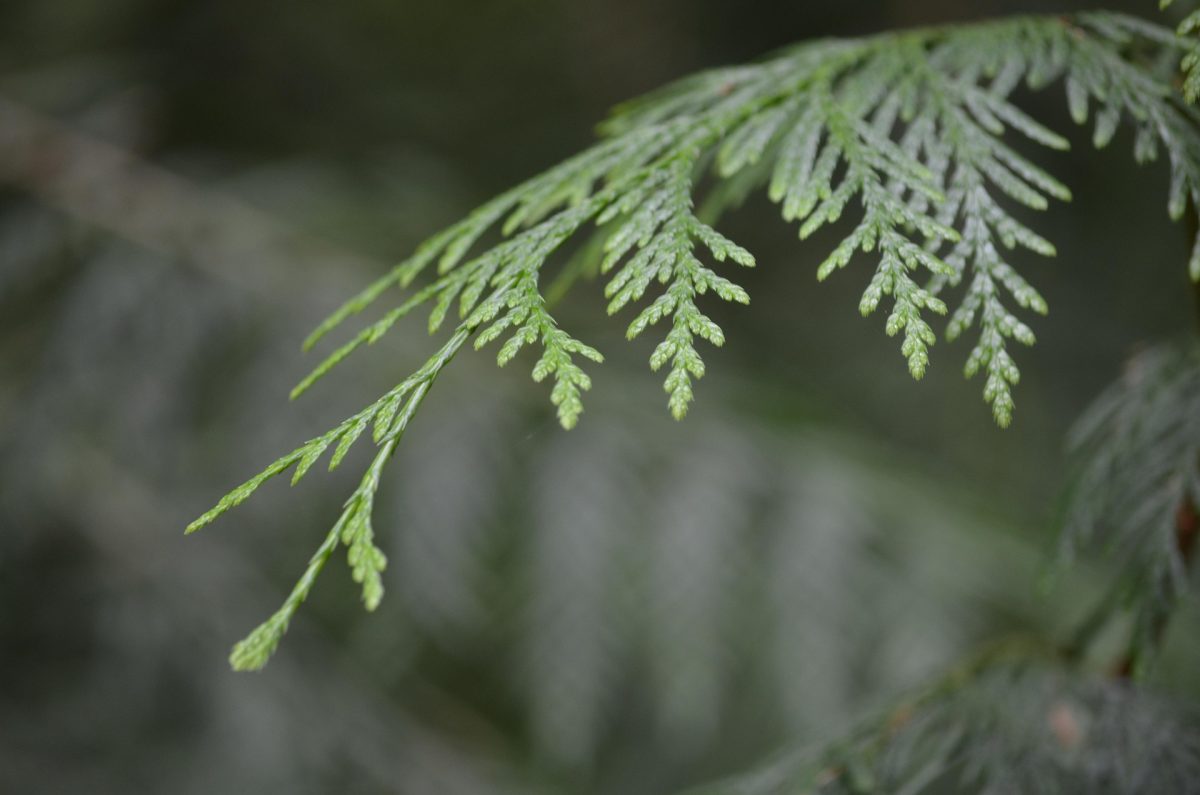
From the misty rainforests of British Columbia to the intricate carvings of Indigenous totem poles, the Western Red Cedar (Thuja plicata) has long been a symbol of strength, endurance, and cultural tradition. With some trees living over 1,500 years, it is a true living legacy of BC’s forests.
The Appearance of Western Red Cedar
Unlike most conifers, Western Red Cedar has feathery, scale-like leaves instead of sharp needles. These leaves grow in elegant fan-shaped sprays and emit a pleasant woodsy fragrance when crushed.
The bark is soft, fibrous, and reddish-brown, peeling off in long strips. These strips were traditionally woven into mats, ropes, and clothing by Indigenous peoples, demonstrating how every part of the tree was used with care and purpose.
Cultural and Historical Importance
Western Red Cedar is often called the “Tree of Life” because of its enormous significance to Indigenous communities. For thousands of years, Indigenous peoples of BC have relied on cedar for canoes, longhouses, and totem poles. Even the inner bark was used to create medicine and textiles.
Cedar’s resistance to decay made it an essential material for structures that needed to endure—many historic totem poles and cedar-built houses have lasted for centuries, standing as testaments to the skill and craftsmanship of the people who built them.
A Tree That Supports Life
Western Red Cedar is not just important for humans—it is also a vital part of BC’s natural ecosystems. Birds such as eagles and owls make their nests in its branches, while bears and deer find shelter in its dense forests.
Even in death, the tree continues to support life. Nurse logs, or fallen cedars, provide nutrients and space for new saplings and plant life to grow. This cycle of renewal helps ensure that BC’s rainforests remain lush and thriving.
Fun Facts About Western Red Cedar
- Western Red Cedar trees can live for over 1,500 years, making them one of the oldest trees in Canada.
- Unlike most trees, its wood is naturally resistant to rot and insects, making it perfect for outdoor use.
- Indigenous peoples believed the cedar tree had spiritual properties, using its wood in purification and healing ceremonies.
- The tree’s bark contains natural antifungal and antibacterial properties, which made it useful in traditional medicine.
- Cedar forests help regulate temperature and moisture levels, creating a stable climate for many other plant species.
Conclusion
Western Red Cedar is more than just a tree—it is a legacy. It has provided shelter, art, and medicine for thousands of years, shaped ecosystems, and stood as a silent witness to BC’s history. Whether admired in the wild or honored in cultural traditions, this remarkable tree will always be an essential part of British Columbia’s forests.