

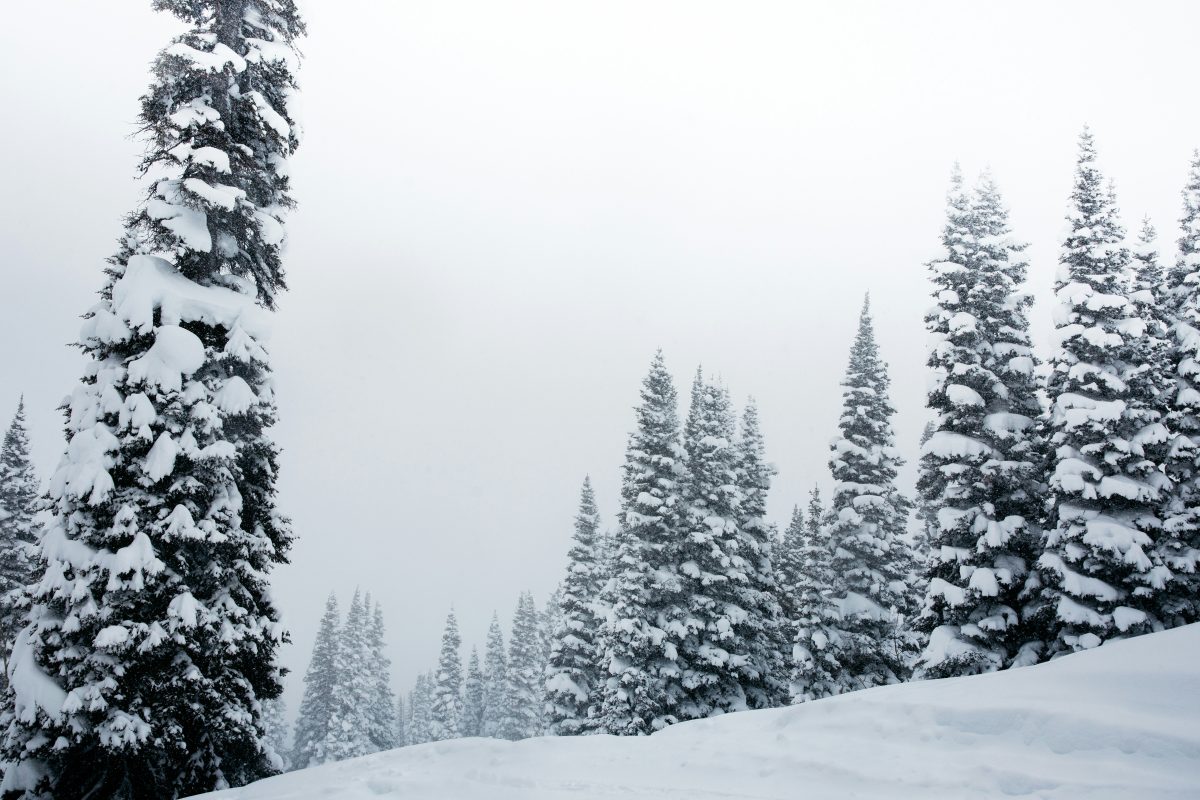
At the edge of BC’s highest forests, where trees struggle against freezing temperatures and heavy snow, the Subalpine Fir (Abies lasiocarpa) stands tall. This remarkable tree is one of British Columbia’s toughest conifers, thriving in some of the most extreme environments in North America.
With its tall, narrow profile and bluish-green needles, Subalpine Fir plays a vital role in BC’s mountain ecosystems, providing stability, shelter, and resilience in the harsh alpine climate.
How to Recognize Subalpine Fir
- Needles: Soft, bluish-green, with a spiral arrangement on the branch.
- Bark: Smooth and gray, often marked by resin-filled blisters.
- Growth Habit: Extremely narrow and pointed, helping it shed snow efficiently.
Its spire-like shape makes it one of the most recognizable trees in high-altitude forests.
Survival in the Harshest Conditions
Subalpine Fir has evolved to withstand some of the most challenging environments in BC:
- Survives in temperatures below -40°C (-40°F).
- Thrives at elevations up to 2,500 meters (8,200 feet).
- Slow-growing but long-lived, with some trees over 400 years old.
Its dense forests help protect mountain valleys, reducing soil erosion, landslides, and avalanches.
Why Subalpine Fir is Crucial to BC’s Forests
Beyond its ability to survive extreme cold, Subalpine Fir is essential for mountain ecosystems:
- Prevents soil erosion on steep, rocky slopes.
- Forms protective forests that reduce the risk of avalanches.
- Provides habitat for high-altitude wildlife.
Without Subalpine Fir, many mountain landscapes in BC would be more vulnerable to climate extremes and environmental degradation.
Wildlife That Depends on Subalpine Fir
- Caribou and deer use its forests for shelter.
- Owls and woodpeckers nest in older trees.
- Bears and wolverines travel through its stands for cover.
Economic Importance of Subalpine Fir
While not as commercially valuable as Douglas Fir or Western Red Cedar, Subalpine Fir is still used for:
- Pulp and paper production, due to its soft, lightweight wood.
- Construction materials, including framing and plywood.
- Christmas trees, thanks to its perfect cone shape and soft needles.
Fun Facts About Subalpine Fir
- The highest-elevation fir species in BC, marking the transition to alpine tundra.
- Resin from its bark was used by Indigenous peoples for medicine and waterproofing.
- Its needles give off a citrus-like fragrance when crushed.
- One of the most commonly planted fir species for reforestation in high-altitude areas.