

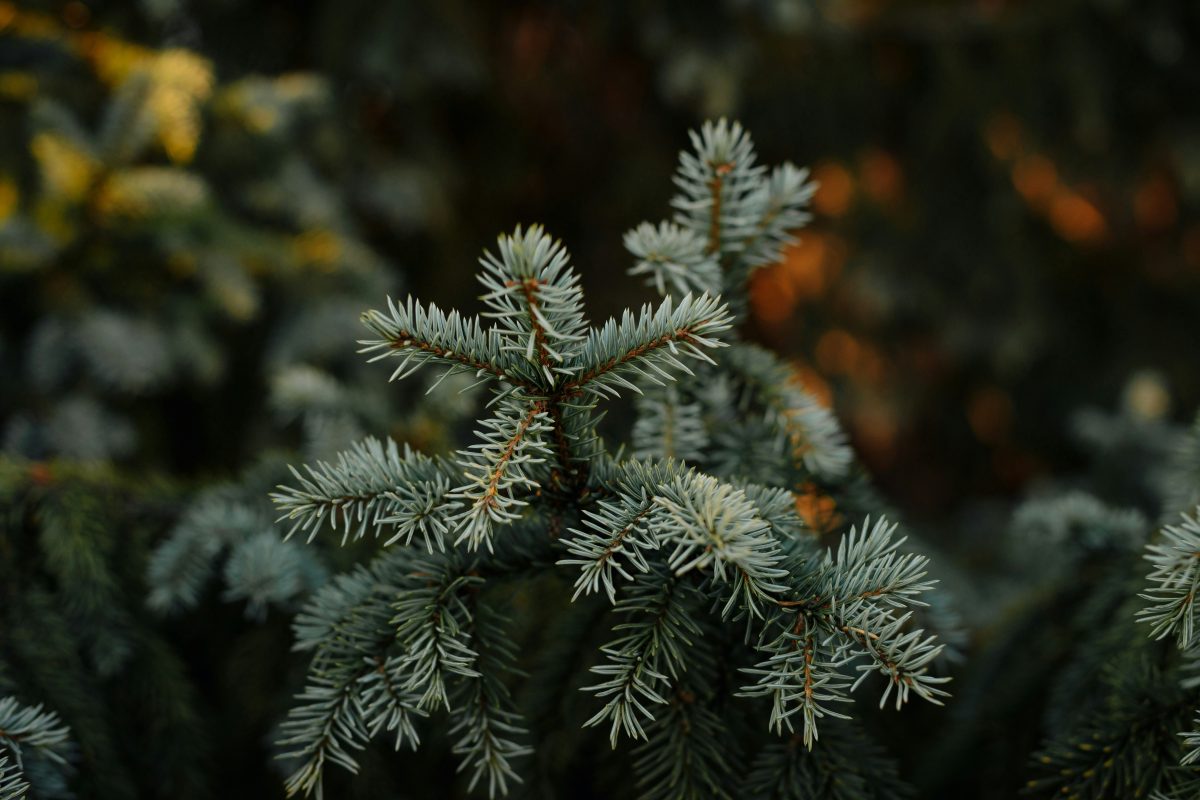
Deep in British Columbia’s mountainous regions, where winters are long and harsh, the Engelmann Spruce (Picea engelmannii) thrives. This tough, cold-resistant conifer is one of the most important species in high-elevation forests, forming dense stands that protect fragile ecosystems.
With its narrow, spire-like shape and soft, bluish-green needles, Engelmann Spruce is well adapted to extreme cold, snow, and high winds. It plays a crucial role in BC’s environment, supporting wildlife, preventing soil erosion, and fueling the forestry industry.
How to Identify Engelmann Spruce
- Needles: Short, pointed, and bluish-green, growing in all directions from the branch.
- Bark: Thin, scaly, and reddish-brown to gray, peeling off in small flakes.
- Shape: Narrow and spire-like, with drooping lower branches that shed heavy snow.
A Tree That Thrives in Harsh Conditions
Engelmann Spruce is commonly found in BC’s alpine and subalpine forests, where few other trees can survive. It can grow at elevations of over 1,800 meters (6,000 feet), enduring:
- Freezing temperatures for most of the year.
- Heavy snowfall, which its drooping branches shed efficiently.
- Thin, nutrient-poor soils, making it essential for stabilizing mountain slopes.
Engelmann Spruce and BC’s Timber Industry
Despite its harsh growing environment, Engelmann Spruce is highly valued for:
- Lumber, as its wood is lightweight, strong, and fine-grained.
- Musical instruments, including violins and pianos, due to its resonant quality.
- Construction and furniture, particularly for framing and paneling.
Wildlife and Engelmann Spruce Forests
Engelmann Spruce provides critical habitat for:
- Mountain goats and deer, which seek shelter in its forests.
- Owls and woodpeckers, which nest in old, hollowed-out trunks.
- Bears and small mammals, which rely on its dense canopy for protection.
Fun Facts About Engelmann Spruce
- It is one of BC’s highest-elevation trees, thriving near the treeline.
- Some Engelmann Spruce trees live for over 500 years.
- Its wood is prized for making violins, pianos, and guitars.
- Indigenous peoples used its resin for medicinal purposes and waterproofing canoes.
- It is closely related to White Spruce but grows at higher elevations.
Conclusion
Engelmann Spruce is one of BC’s toughest and most valuable trees, standing strong in high-altitude forests where few other species can survive. Whether providing shelter for wildlife, supporting the timber industry, or stabilizing mountain slopes, this tree is an essential part of British Columbia’s wilderness.